Pool Leak Detection
Faerie Glen
Pool leak detection in Faerie Glen begins by ruling out evaporation, which can take close to 6 mm a day in October. Then the shell, fittings and pipework are tested until the loss has one cause. Leaks inside the house are covered under leak detection.
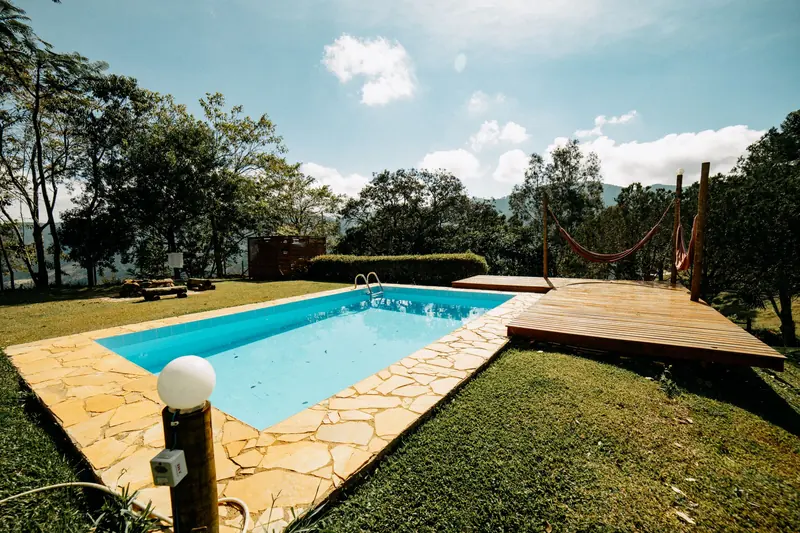
Clues that a pool is leaking, and what each narrows down
Where the water goes depends on whether it leaves under pressure or simply drains away.
The level drops more with the pump running
Loss that speeds up while the pump runs points to the pressure side: the return lines, the filter, the multiport valve and the fittings after the pump. Those pipes only carry water under pressure while it runs, so the second bucket test confirms it.
The level drops more with the pump off
Loss with the pump off points to the shell, the suction side, the main drain or a light niche. These hold water whether the pump runs or not, and the pump-off test separates them from the return side.
Cracks in the shell or along the coping
Hairline cracks in the Marbelite or plaster, and gaps where the coping meets the bond beam, are listed leak points. Clay-rich soils that move between wet summers and dry winters can work those cracks open further.
Air bubbles at the return jets
Air in the returns suggests the suction side is drawing air in through a loose fitting or a cracked line. A joint that lets air in under suction can let water out when the pump stops.
A soggy patch near the pool or the pump
Lawn or paving that stays wet in dry weather is being fed from somewhere. The pipe runs between the pool and the pump are pressure tested one at a time to find which run is responsible.
Chemicals and top-ups both climbing
Rising chemical use alongside frequent top-ups is one of the listed warning signs of a leak, because the fresh water keeps diluting the balance. A pool that needs both is worth a bucket test before another bag of chlorine.
Under Tshwane’s water restrictions, topping up is not a fix
For years a leaking pool could be managed with a hosepipe. That option has gone. Tshwane’s Level 1 restrictions in February 2025 said “Do not fill or refill swimming pools”. By September 2025 the wording allowed manual top-ups only for pools fitted with a cover that prevents evaporation, and the water supply by-law lets the City restrict the supply to a property that ignores restrictions.
That makes it worth knowing whether water is leaving the pool through a crack or simply into the air. East of Pretoria, a lot of it goes into the air. A 2025 study using a site about 20 km east of the city puts open-water evaporation at around 1,660 mm a year: roughly 5.8 mm a day in October and December, falling to about 2.8 mm a day in June.
So a pool dropping 5 mm a day in a hot, windy October week may be losing nothing to a leak, while the same drop in June deserves a closer look. The bucket test settles it. A bucket of pool water stands on the second step, partly submerged, with both water levels marked, and after 24 hours the two drops are compared. When the pool’s level drops more than the bucket’s, the extra loss is a leak.
Running the test again with the pump switched off narrows it down. More loss with the pump on points to the pressure side, from the pump to the return jets. More with it off points to the shell, the suction lines or a light. From there the suspect lines are pressure tested and dye is released near cracks and fittings, so the leak is pinned down before any coping or paving is lifted.
Backwash water has rules of its own. The City’s sanitation by-law lets pool water go into the property’s own drainage, but not onto roads, gutters or stormwater drains without written permission. A pool that leaks and is backwashed onto the street is losing water twice, and only one of those losses is out of sight.
Before you book anyone, run the bucket test for 24 hours with the pump on, then again with it off, and write both results down.
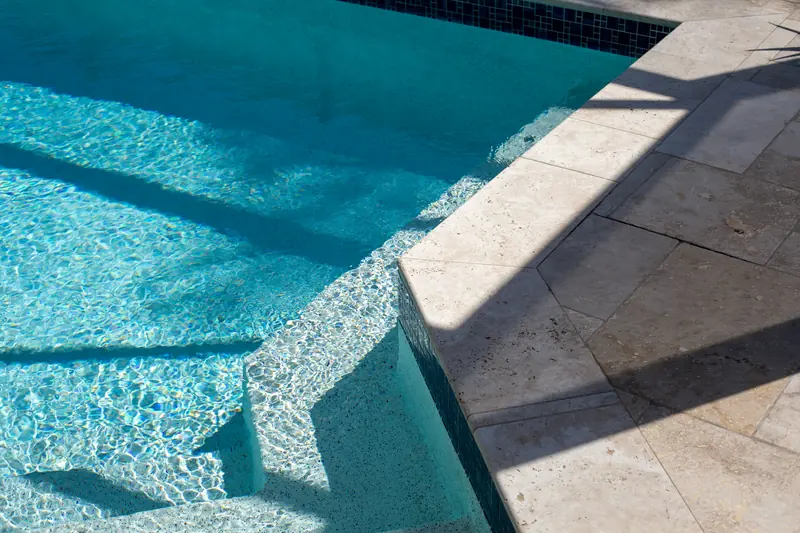
How a pool leak search is run
Ground rules, because a pool surround is easy to break up and hard to put back.
-
Evaporation settled first
Two bucket tests, pump on and pump off, before any equipment comes out. If the loss turns out to be the weather, you hear that plainly.
-
Lines tested one by one
Suction and return lines are isolated and pressure tested separately, so the leaking run is named rather than guessed.
-
Dye at the suspect points
Cracks, skimmers, light niches and return fittings are checked with dye in still water, so you can watch the draw for yourself.
-
A written finding
Where it leaks, what it needs and what it does not. The repair is priced only after the leak has been found.
Cheap tests first, slow ones only where needed
The pool stays full throughout.
-
Your bucket test
Run it for 24 hours with the pump on and again with it off, then send us both results.
-
Confirm on site
The level loss is measured and the pump, filter and visible fittings are checked.
-
Pressure and dye
Suction and return lines are pressure tested, and dye is used at cracks and fittings.
-
Mark and price
The leak is marked and the repair priced before any tile or paving is lifted.
Pool leak questions
Including the ones the restrictions have raised.
How much does pool leak detection cost in Faerie Glen?
How much water does a pool lose to evaporation in Pretoria?
Can I top up my pool during Tshwane’s water restrictions?
Why does my pool lose more water when the pump is running?
Where do swimming pools usually leak?
Will painting or resurfacing the pool stop the leak?
Where am I allowed to send my backwash water?
Can a pool leak be found without draining the pool?
Request pool leak detection in Faerie Glen
Send your bucket test results if you have them, and say whether the pump was on.
Where we work
- Faerie Glen
- Garsfontein
- Lynnwood Glen
- Moreleta Park
- Lynnwood
- Lynnwood Ridge
- Lynnwood Park
- Die Wilgers
- Equestria
- Wapadrand
- Olympus
- Constantia Park
- Waterkloof Glen
- Menlyn
- Silver Lakes
- Mooikloof
- Woodhill
- Murrayfield