Geyser Repairs
Faerie Glen
Geyser repairs in Faerie Glen start with a meter and a test, not a new tank. A geyser that stops heating after a water cut usually needs an element, a thermostat or a valve, and those are tested before a replacement is ever mentioned. You hear the call-out fee first.
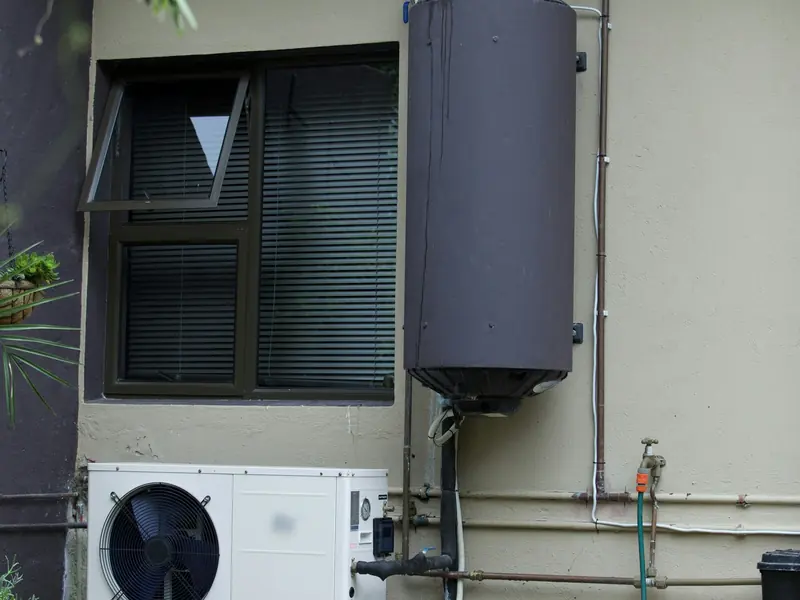
Six geyser faults, and what each one points to
Most of these are a part, not a new geyser. They are listed roughly in the order they get tested.
No hot water, board not tripped
Usually the element or the thermostat. Scale that builds up on an element insulates it from the water, and an element that has heated an empty tank can fail outright. Both parts are tested in place before anything is ordered.
The board trips when the geyser switches on
An element that has broken down to earth trips the earth-leakage switch. The element is the fault, not the board, and the electrical connection is made good to SANS 10142-1 once it is replaced.
The overflow pipe drips
Some dripping is normal. Kwikot puts expansion discharge at about 5% of the geyser’s volume a day, roughly 7.5 litres for a 150 litre geyser. A steady run day and night points to the pressure control valve or an over-pressurised supply.
Water in the drip tray or through the ceiling
If a fitting or valve is leaking, it is a repair. If the tank body itself is weeping, the anode has usually been used up and the steel is corroding from inside, and that geyser needs replacing.
Brown or rusty hot water
Rust in the hot water only is a warning about the tank and its anode. OUTsurance notes an anode stops working properly after 12 to 18 months, and Kwikot advises checking it every three to four years.
Water too hot, or steam at the overflow
A thermostat that has failed closed lets the water keep heating until the temperature and pressure valve opens, at about 94 °C. That valve is doing its job. The thermostat is the part to replace.
A geyser left on during a water cut can burn out its own element
Faerie Glen’s water is switched off upstream more often than most people expect. Rand Water stopped pumping into its Mapleton system for four and a half days from 29 May 2025, and the City’s notice listed Faerie Glen under six separate supply points. In April 2023 a power failure at the Mapleton booster station left the same zones with what the City called “low water pressure to no water”.
A geyser has no idea the street has run dry. If the supply drains back while the element is still switched on, the element can end up heating a pocket of air instead of water. That is why Santam’s advice before an announced cut is simple: switch the geyser off at the distribution board, and only switch it back on once the water is back.
The same thing can happen straight after a repair. Replacing an element means draining the geyser, and if the power goes back on before the air has been bled out through the hot taps, an air pocket can sit around the new element. That is how a brand-new element burns out in its first weekend, and the homeowner blames the part.
Vacuum breakers matter for the same reason. They sit on the hot and cold pipes and stop the tank being siphoned, or collapsing, when the supply pipes drain down, which is exactly what an outage does. Faerie Glen dates from 1974, so some geysers here were first installed long before SANS 10254 became compulsory in June 2001, and an older installation may not have them.
So a geyser repair in this suburb includes the commissioning, not just the part. The tank is refilled, every hot tap is run until it stops spitting air, the vacuum breakers and pressure control valve are checked, and only then does the power go back on at the board.
Before an announced cut, switch the geyser off at the board. After any geyser work, make sure the hot taps are run clear before the power goes back on.
What a geyser call-out includes
What holds on every geyser job, whatever the fault turns out to be.
-
Tested before it is condemned
Element, thermostat and valves are tested first. If the tank itself is leaking, you are shown the leak before you hear the word replacement.
-
Replaced parts brought up to standard
A new valve, element or thermostat has to meet SANS 10252-1 and SANS 10254. Anything else in the roof that does not comply is noted for you in writing.
-
Parts named on the invoice
Element rating, thermostat type, valve pressure rating, each by name and price, so an insurer or the next plumber knows exactly what is up there.
-
A cause your insurer can use
If the geyser burst and you are claiming, the report says what failed and why. Rust and wear-and-tear exclusions are common, so the cause decides the claim.
From cold taps to hot water
From the form to hot water, with nothing done that you have not agreed to.
-
Tell us what it is doing
No hot water, a dripping overflow, a tripping board or water on the ceiling. The geyser’s size and age help if you know them.
-
Test, then quote
The fault is found with the power isolated at the board. You get the price of the repair before the repair starts.
-
Repair and commission
New part in, tank refilled, air bled from the hot taps and valves checked. Then the power goes on and the heating is checked.
Geyser repair questions
Starting with the one everybody asks first.
How much does a geyser repair cost in Faerie Glen?
Is it worth repairing an old geyser?
Why is my geyser overflow pipe dripping?
Why does my geyser trip the electricity?
What temperature should my geyser be set to?
Does insurance cover a burst geyser?
Do I need a certificate of compliance after a geyser repair?
I live in a complex. Who pays for my geyser repair?
Request a geyser repair in Faerie Glen
Describe the symptom and, if you know it, the geyser’s age. The reply books a time window.
Where we work
- Faerie Glen
- Garsfontein
- Lynnwood Glen
- Moreleta Park
- Lynnwood
- Lynnwood Ridge
- Lynnwood Park
- Die Wilgers
- Equestria
- Wapadrand
- Olympus
- Constantia Park
- Waterkloof Glen
- Menlyn
- Silver Lakes
- Mooikloof
- Woodhill
- Murrayfield