Commercial Plumbing
Faerie Glen
Commercial plumbing in Faerie Glen means working around trading hours, tenants and body corporate rules, on a supply the City does not promise to keep running. Storage tanks, grease traps, backflow and approvals are handled to Tshwane’s by-laws, and pricing is agreed before any work starts.
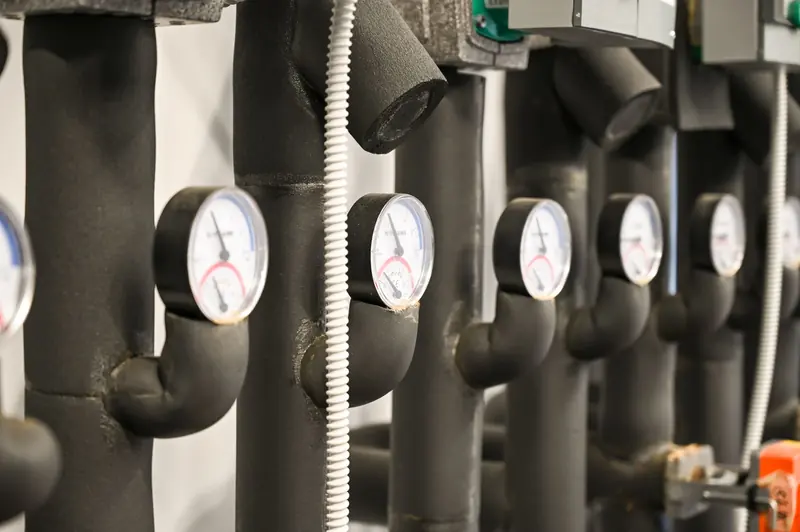
Commercial plumbing problems and the rule behind each
On business premises a plumbing fault usually comes with a by-law attached. This is what applies to each one.
Kitchen drains that block every few weeks
Tshwane’s Sanitation By-laws require an approved grease trap wherever grease is likely to block a drain, and SANS 10400-P asks for one ahead of any non-domestic waste system. A trap that is too small or rarely cleaned shows up as repeat blockages.
No grease trap register
Where interceptors are required, the by-laws expect a register of each cleaning date, the company that did it and a disposal certificate. An inspector asks to see the register, not to hear what the manager remembers.
Alterations on business premises
Plumbing work on non-dwelling premises needs the City’s written approval first, with drawings and a design certificate from a registered engineer or competent person. That approval lapses after 24 months, so an old one needs checking.
Leak disputes in a sectional title complex
The body corporate maintains pipes on the common property, while pipes and geysers that serve one section belong to that owner. When that line is drawn in the wrong place, trustees and owners end up arguing over the same leak.
Stored hot water at the wrong temperature
SANS 10252-1 asks for stored hot water of at least 55 °C, with no part of the system sitting between 25 and 45 °C, the range Legionella favours. Buildings with storage tanks and long hot-water runs are where this matters most.
Backflow preventers nobody has serviced
Where a building needs backflow protection, the preventers must be serviced, and Tshwane’s Water Supply By-laws reserve that work for plumbers. A preventer that has never been opened protects nobody.
Premises that cannot close must hold 24 hours of water
Tshwane’s Water Supply By-laws are blunt about supply. The City does not undertake to keep it uninterrupted, at a set pressure or at a set quality. Premises that need water continuously for the work done there must have their own storage tank, built to SANS 10252-1 and holding at least 24 hours of supply.
For Faerie Glen that rule is practical, not theoretical. The City’s own notices record at least ten cuts or curtailments to the supply zones serving the suburb between January 2023 and August 2026, one of them a Rand Water pumping stop of four and a half days in mid-2025. A consulting room, a restaurant kitchen or a laundry cannot plan on water being back by evening.
These are the kinds of premises the storage rule is written for: the shops and kitchens along Atterbury Road, at Glen Village Shopping Centre and at Atterbury Value Mart, the offices at Boardwalk, and the medical suites around Life Faerie Glen Hospital. For each tenant the question is the same. What in the building stops working when the street runs dry, and for how long?
Sizing the tank starts with real consumption, and the monthly figures are already on the water bill. The by-laws also allow the City to ask any user for water-efficiency information, including monthly use and the number of people on site. A booster pump then draws from the tank, never straight off the main, and each tank gets isolating valves and an inlet valve that will not slam shut.
Stored water brings duties of its own. SANS 10252-1 asks for cold water stored at no more than 20 °C, tanks cleaned regularly, and an operation and maintenance manual with as-built drawings wherever an installation has storage tanks. That paperwork is what a building manager hands over when an inspector or an insurer asks for it.
If your premises cannot close when the water stops, the by-law expects 24 hours of storage, and the drawings and manual to prove it.
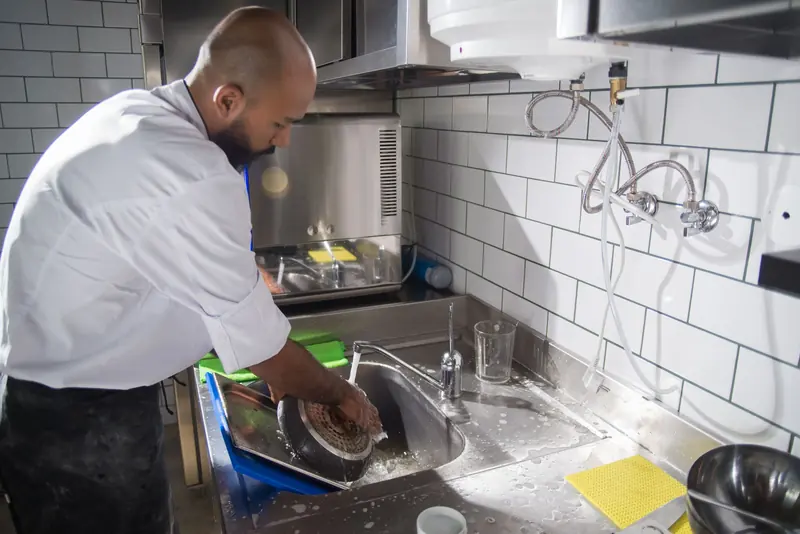
How commercial work is run
Commitments for premises where a closed tap costs trading time.
-
Shut-offs planned with the building
Water is turned off in windows agreed with the manager or the trustees, so a kitchen is not dry at lunch and a practice is not dry during consulting hours.
-
Paperwork that survives an inspection
Grease trap entries, tank details, completion certificates for drain alterations and as-built notes are kept so the next inspector or plumber can read them.
-
Common property or section, settled first
In a complex, who owns each pipe is agreed before the quote, so the body corporate and the owner each receive their own invoice.
-
Approvals in place before work
Where non-dwelling work needs the City’s written approval, it is obtained before the first pipe is cut, not after an inspector asks.
Planned around trading hours
Agreed with whoever runs the building, and priced before the first shut-off.
-
Site visit and brief
Who uses the building, when water cannot go off, and what has failed. The manager or trustees say who signs off.
-
Rules and approvals
Which by-laws apply, whether drawings and City approval are needed, and who owns each pipe.
-
A written, priced plan
A quote in writing, with the shut-off times agreed in advance.
-
Work, test and hand over
Work done in the agreed windows, tested, and handed over with the notes and the paperwork the work requires.
Questions from managers and trustees
For managers, trustees and owners of business premises.
How is commercial plumbing priced in Faerie Glen?
Does a restaurant in Pretoria need a grease trap?
How often should a grease trap be cleaned?
Who pays for plumbing repairs in a sectional title complex?
Does plumbing work on business premises need City approval?
What must a body corporate’s maintenance plan include?
Can we split one bulk water meter between tenants?
Who may service our backflow preventers?
Request commercial plumbing in Faerie Glen
Name the premises and the hours water cannot go off. The reply sets up a site visit at a time that suits the building.
Where we work
- Faerie Glen
- Garsfontein
- Lynnwood Glen
- Moreleta Park
- Lynnwood
- Lynnwood Ridge
- Lynnwood Park
- Die Wilgers
- Equestria
- Wapadrand
- Olympus
- Constantia Park
- Waterkloof Glen
- Menlyn
- Silver Lakes
- Mooikloof
- Woodhill
- Murrayfield